Buy Back Your Time - Summary and review



How to build a SaaS you don't grow to hate
The buyback principle = don't hire to grow your business. Hire to buy back your time.
Grind harder vs. build the game you want to play forever
LIE: "The more I work, the more successful my business will be".
You can't personally outwork yourself to a better business. Instead, the smartest entrepreneurs look for a way to build a game you want to play forever. It looks something like
The more money your business makes → the more of your time you buy back → happier founder.
The pain line of SaaS
Growing a SaaS company is painful - and that is something you have to endure as a founder. But you also need to spend your time on tasks that energize you, and free up time for valuable tasks. Otherwise, you will inevitably reach the "pain line".
The pain line = the point where growth becomes impossible.
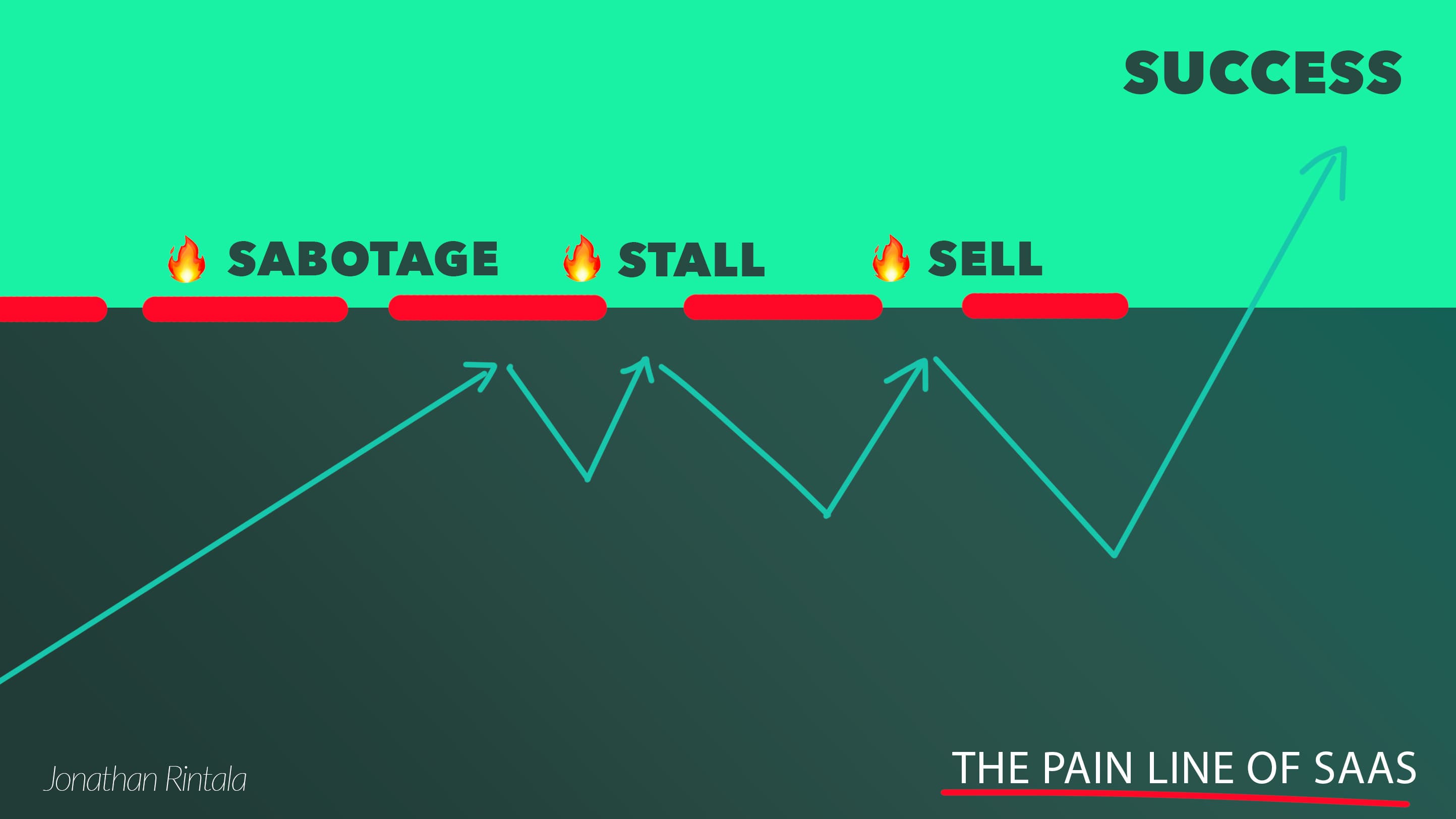
What happens when you hit the pain line?
Either (A) change - adopt new beliefs, systems, strategies, or (B) subconsciously stop your own growth by either:
1. Sell
You try to exit your business by selling it. But as you, typically at this point, do it from a position of desperation as you have already hit your pain line, it rarely becomes an optimal exit.
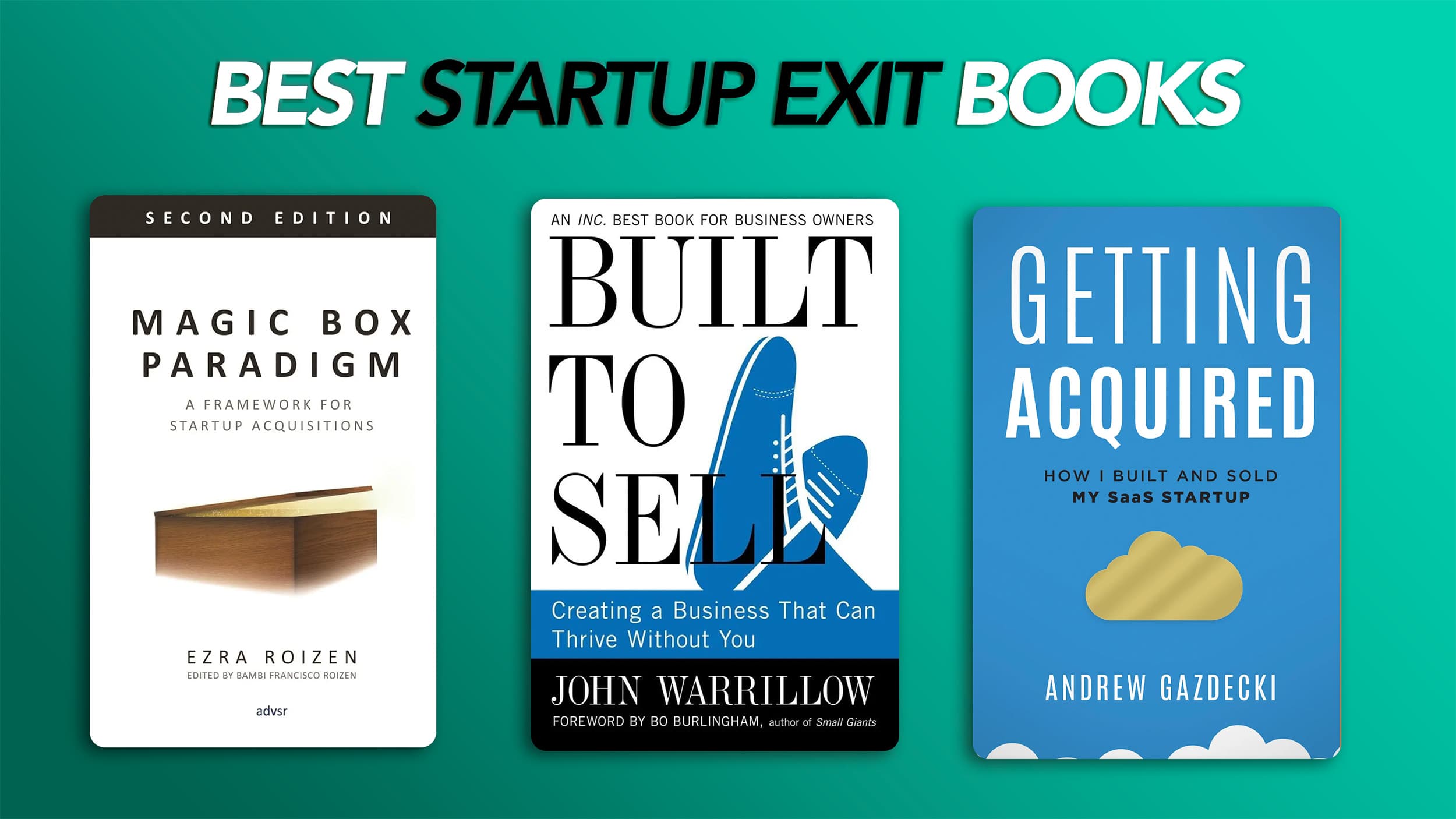
You don't want to sell your business - you want to get bought. Learn more about the best books on startup exits to get it right.
2. Sabotage
You self-sabotage without knowing it. You as founder make bad decisions that prevent more painful growth from taking place, it can be random things like:
launch new products or business
rebrand or rehaul the website
replace staff because of small mistakes
By doing so, you knock down growth to a manageable state - but prevent your business from growing at the same time. And often you are not even aware of it.
3. Stall
You tell yourself, "I'd rather have smaller company".
Stalling is secretly a decision to slowly let your business die, as growth is necessary for survival. A stalled company will be less attractive to customers, employees, and will slowly get eaten up by competitors.
On the other hand, more business growth = more freedom. When you grow (in the right way), you can hire, develop faster, and deliver more value to customers, which creates a reinforcing loop. At the same time, it allows you to spend more time on strategic work that makes more money, grows the business, AND gives you more energy.
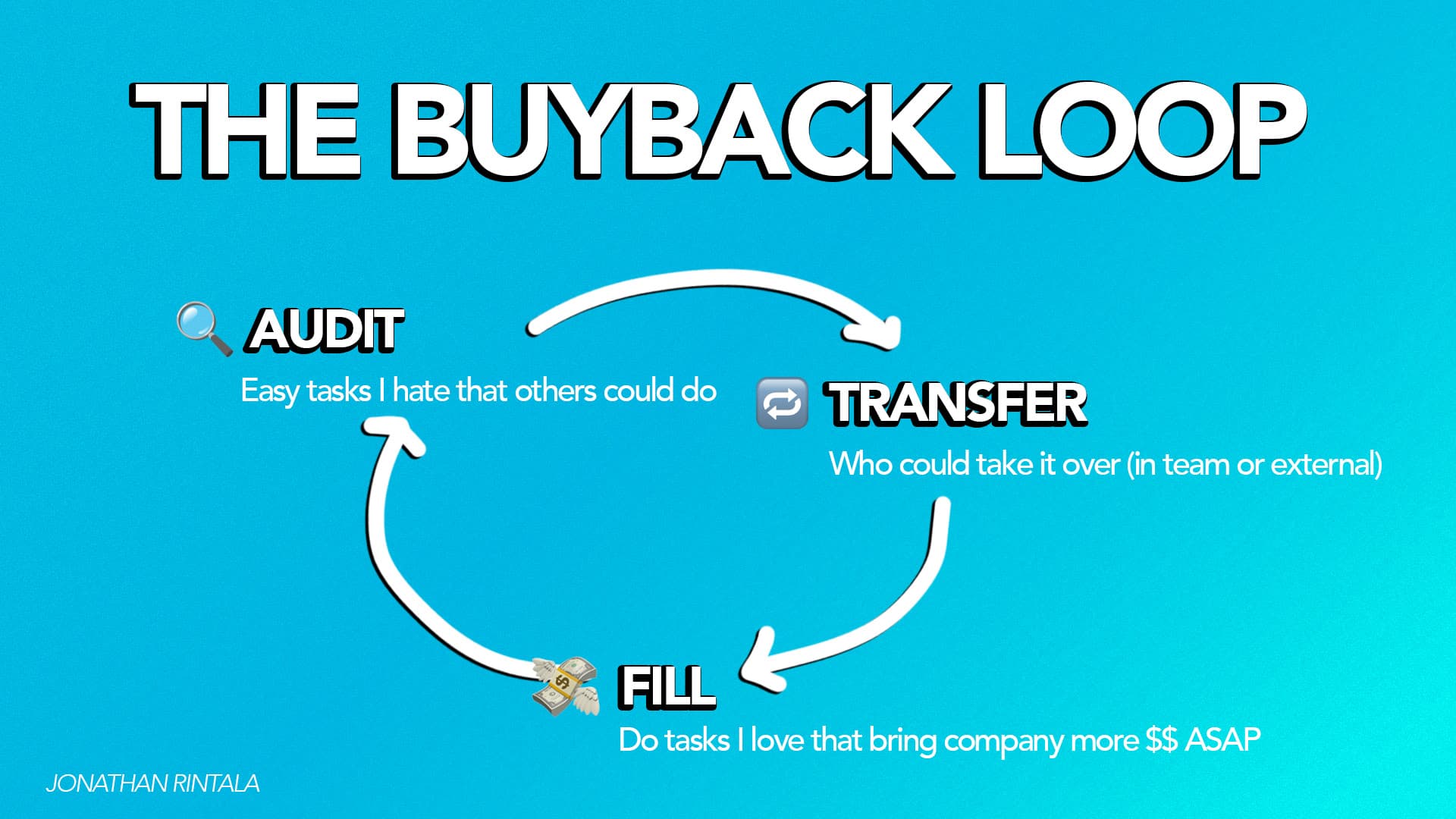
The Buyback Loop
A Buyback loop is when you scale by looping over the following 3 steps.
🔍 Audit: Continuously audit your time to determine the low-value tasks that are sucking your energy.
🔁 Transfer: Transfer those tasks (ideally to someone who is better at them & enjoys them)
💸 Fill: Fill your time with higher-value tasks that light you up and make you more money
Building systems > setting goals
Do not focus on working as hard as you can, or think that setting the right goals is what makes or breaks your business. Focus on building systems.
As James Clear in Atomic Habits puts it:
You do not rise to the level of your goals. You fall to the level of you systems.
- James Clear, Atomic Habits
The billionaire formula
Don't be an employee at your own company - and spend your time on tasks that you are not 10X good at, or that drain your energy. Instead, to become ultra-successful (like billionaire-level success).
find what lights you up and then
spend all your time and energy on that
Billionaires like Oprah Winfrey followed this formula.
Design your perfect week
A perfect week is planned and proactive, and designed around energy levels and task types to do the best work - rather than a reactive week filled with context switching, energy-draining tasks, and random buffer time.
A proactive (Perfect) week:
planned according to schedule rather than reactively
designated time slots to route demands on their time
planned according to energy + batch tasks to reduce context switching
get you far more done
get the most important tasks done (because they're in the calendar)
know what to say no to, to say yes to something new (as important tasks are in the calendar)
Engineering your perfect week is about:
being able to iterate
realizing energy matters just as much as time
honoring the set plan (eg. don't let meetings go over time)
letting important work go first, then everything else
working in batches
What kills you? A constant nagging frustration of lost productivity - caused by context switching throughout the day.
The 3 Trade Levels
The three levels of trades that are available to everyone (but most people don't realize they are making them).
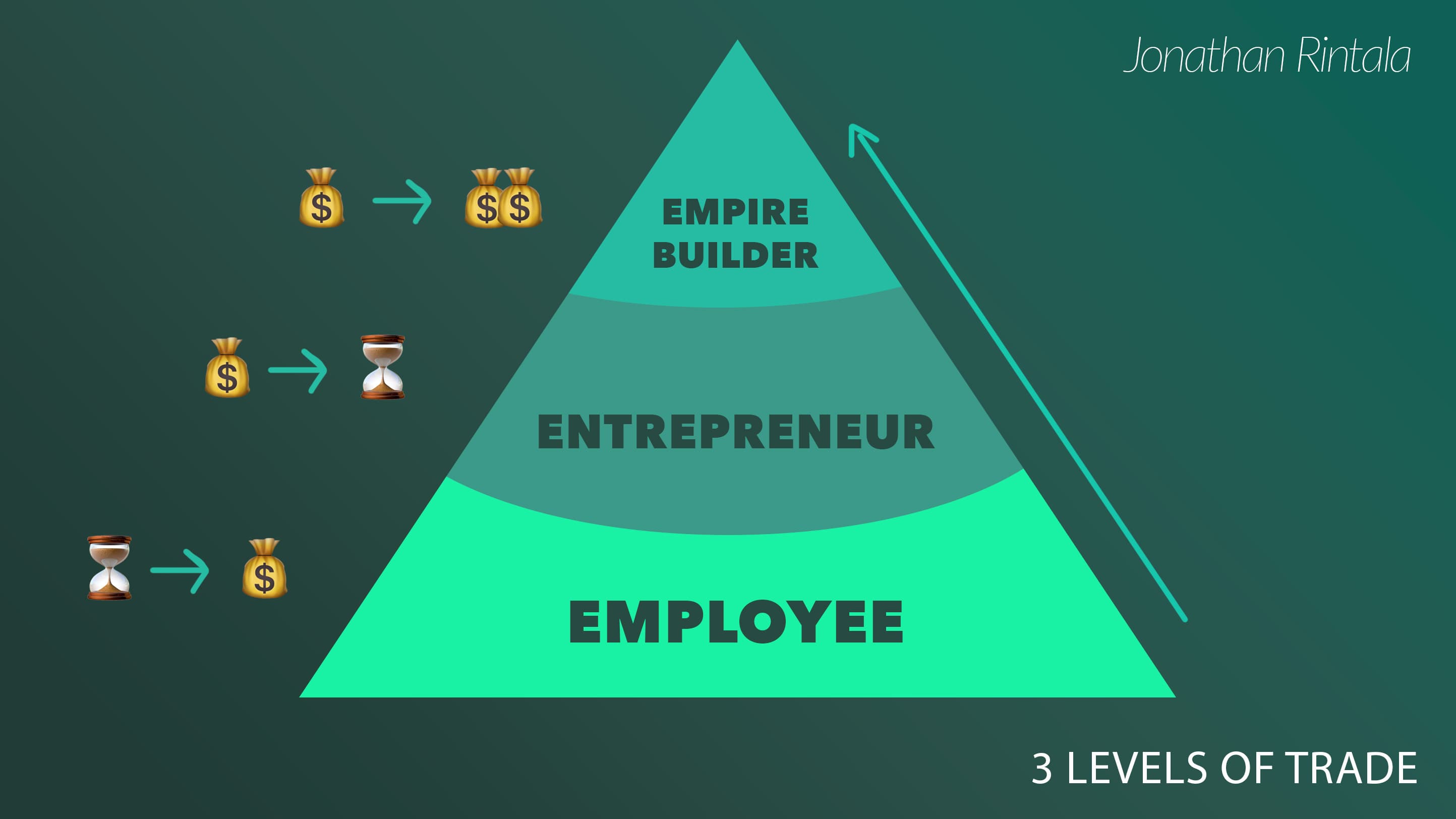
1. Employee: time for money = income
Using your time to buy an income. Most entrepreneurs get stuck here, grinding things out.
2. Entrepreneur: money for time = leverage
Starting to ask: how do I buy back more time with this purchase?
Not just hiring more people (can increase workload), rather asking above question before making a hire, buying software, or completing transaction.
Delegate + replace in motion, focus on the most valuable tasks you enjoy.
3. Empire-builder: money for money = freedom
You need to go through the prior levels first.
You can focus solely on strategic questions - and have already found replacements and delegated most or all operational work.
The only 4 time hacks you need
1. $50 magic pill 💊
Allow employees freedom to make decisions up to a certain limit - for example, spend up to $500 to fix a problem without getting permission. This freedom to make independent decisions creates a healthy culture of autonomy.
Recommended: Also set a rule that they need to tell you about the expense in the upcoming meeting with you, to maintain a sense of accountability.
2. Sync meetings with repeat agenda 🔃
Daily sync meetings with the same agenda will help build a templated framework for autonomous decision-making that an administrative assistant or employee could execute on.
3. Definition of done ✅
Clearly paint the picture of what the final result of the task looks like - the definition should include 3 things:
Facts: Which hard business metrics need to be achieved or improved?
Feelings: How must you and others feel for this to be considered complete?
Functionality: When this task is finished, what must it enable others to do?
4. The 1:3:1 rule 📖
The 1:3:1 rule ensures only relevant problems are brought up to management, and with solutions already suggested by the person finding the problem - saving time, and reducing unnecessary noise. Three steps:
Define the one problem that needs to be solved
Offer three viable solutions
Make one suggestion from that list of possible solutions
7 pillars of a successful life
Here are the 7 pillars of a successful life.
Health: without it, you've got nothing
Hobbies: use decompression
Spirituality: tap into the energy (religion, yoga, or meditation)
Friends: don't drop the ball
Love: go all in on your relationships
Finances: face the money
Mission: know why you're trying - what's your personal North Star

A lot of entrepreneurs think they should go vertical in one area - and neglect all the rest. That rarely ends well, as relationships, health, and other things break.
Instead, try to find a balance between the 7 pillars of life.
To find your balance: try to assess every week what your balance is like, and where to improve.
✍️ My top 5 quotes
These are, in my opinion, the top quotes from the book Buy Back Your Time.
Quote 1
A decision to not grow is a decision to slowly die.
Quote 2
Don't hire to grow your business. Hire to buy back your time.
Quote 3
You can't personally outwork yourself to a better business
Quote 4
The little-known secret to reaching the next stage of your business is spending your time on only the tasks that: (a) you excel at, (b) you truly enjoy, and (c) add the most revenue to your business.
Quote 5
Many of the opportunities you have in your life are generated by the energy you create around you.
Frequently asked questions (FAQs)

Q: Who is Dan Martell?
Dan Martell is an entrepreneur, angel investor, and SaaS coach. He founded, scaled and successfully exited three technology companies within a ten year period. In 2012 he was named Canada’s top angel investor, having invested in more than 50 start-ups, such as Intercom, Udemy, and Unbounce.