The SaaS Benchmark Guide: 9 Metrics Every Founder Needs to Track
Discover the 9 SaaS metrics that separate average companies from elite ones - including KPI:s like NRR, Rule of 40, churn, CAC payback, and more.

Why SaaS metrics and KPI:s matter (as a founder)
As founder of a SaaS, the metrics you should track depends abit on where you are in the journey.
Going from zero to 1 with a startup involves alot of founder intuition and hard work to get things going, where measuring things might feel like a luxury you can't afford.

Well, I did it with my SaaS Univid - but it was not a straight road, and we definitely did not start out being data-driven. But bit by bit, during our +5 years of building, we improved.
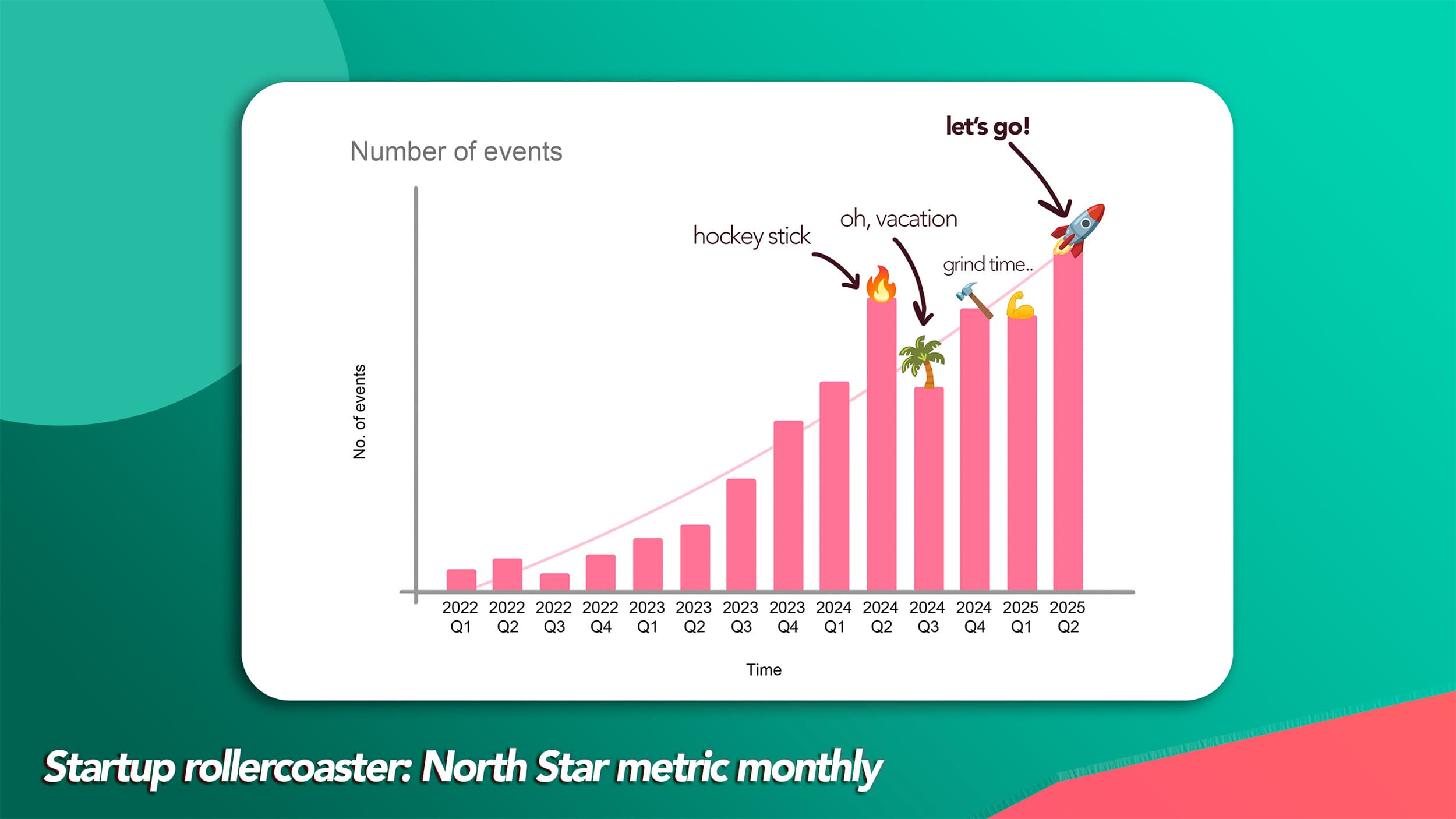
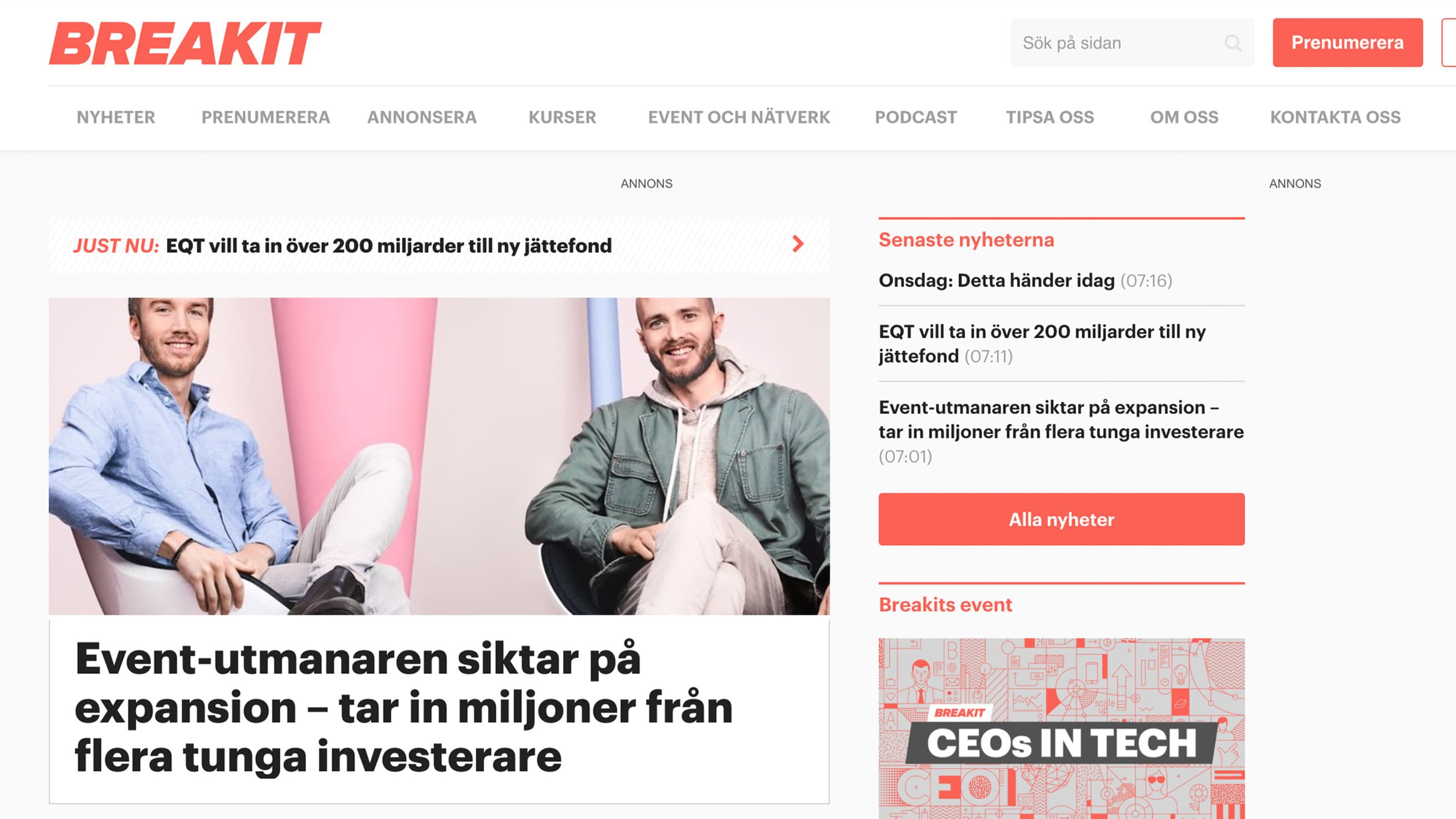
Also, along the way we brought on investors and a formal board, which forced us to structure our data and SaaS KPI:s each month.
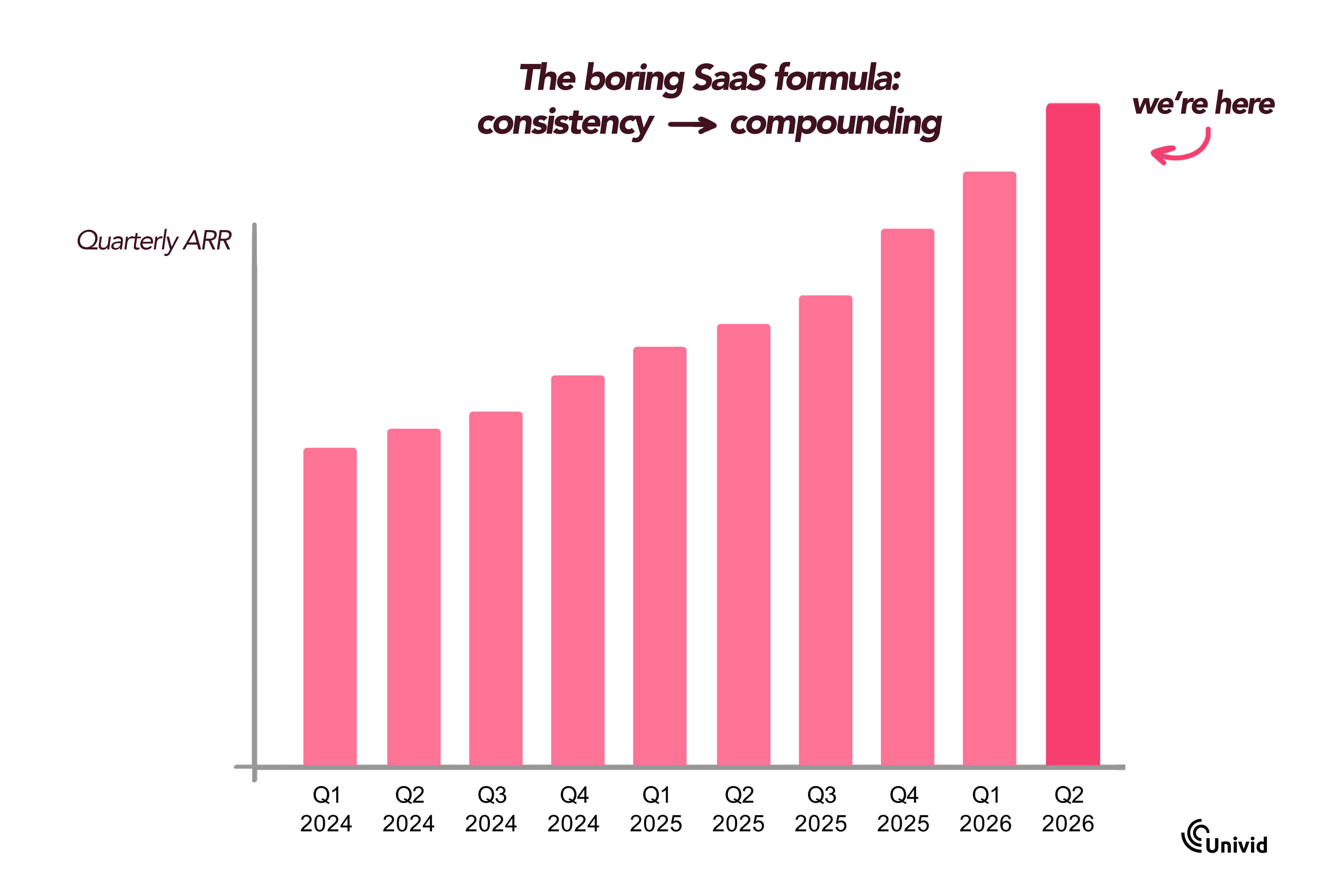
Over the years, we developed frameworks to start measuring all our growth, things like NRR, and benchmark ourselves on these KPI:s. This, in turn, allowed us to understand what great looks like and how to tweak the business to get there. And finally, we started to even hit the goals we set out over a year in advance (!). Well, I guess we finally built a predictable machinery!
So why measure KPI:s in your SaaS? Because your investors tell you to. Well, that could be one reason. In the beginning, it was ours. But keeping track of your data is actually really useful as a founder, too, maybe even more when bootstrapping.
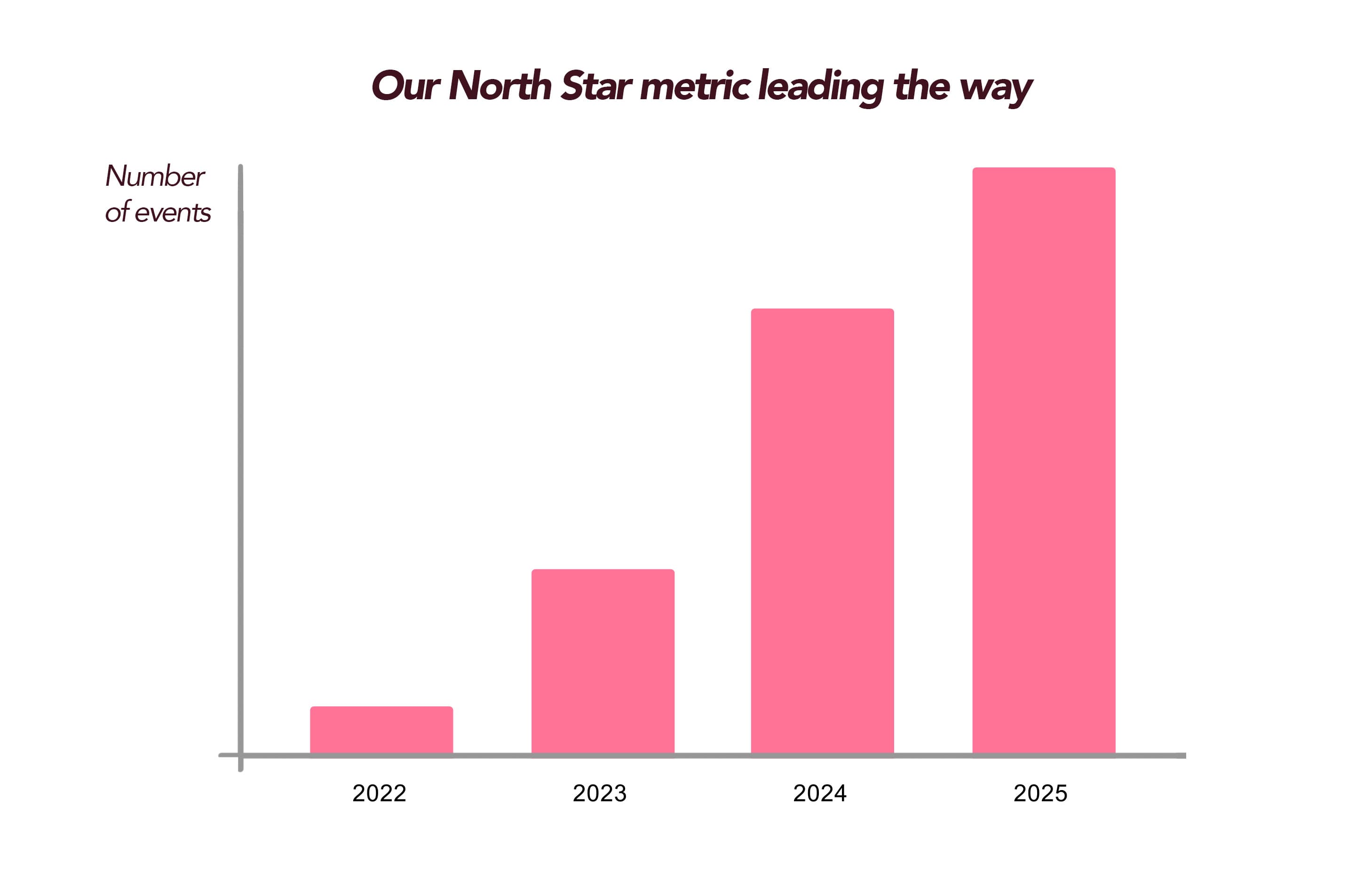
Later on in the growth stages, when you have some traction and your first customers, measuring your SaaS becomes increasingly important - both to understand your business as it grows, how to operate it more efficiently, and how to grow faster - answering questions like:
what to double down on?
what needs to be cut?
who to hire?
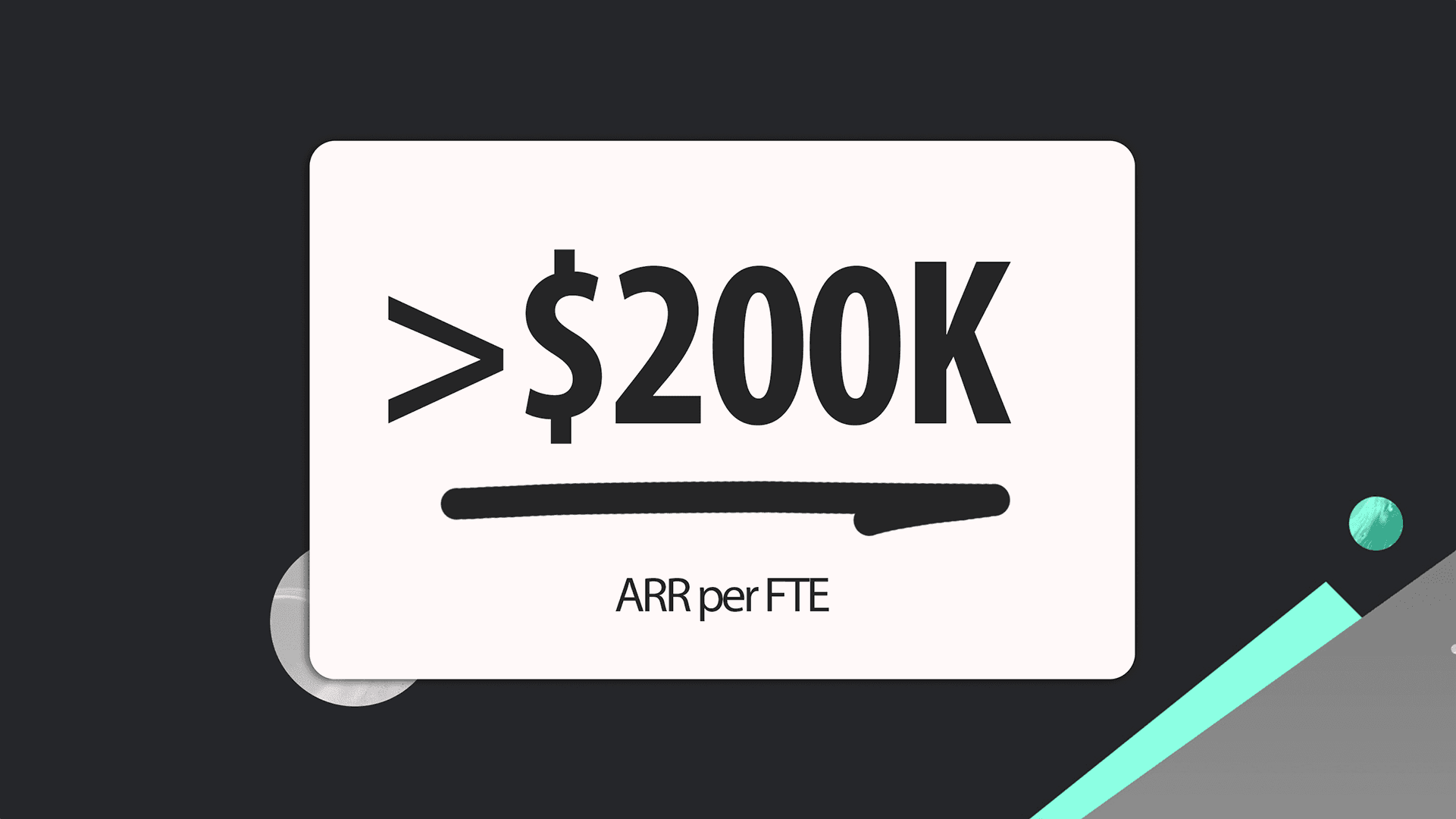
And yes, SaaS KPI:s become important if you plan to involve external people in your business - for example, if you plan to raise capital from VC, or exit and sell your company. But also when bootstrapping, knowing your burn and how much to push the gas on costs is fundamental if you don't want to be stuck in what "Buy Back Your Time" refers to as Employee mode.
What SaaS metrics and KPI:s to track (9 key ones)
If you are running a SaaS in growth stage - here are 9 SaaS metrics to track (and benchmark against) to make sure you are growing like you should.
Metric | Category | OK | Good | Great |
|---|---|---|---|---|
Rule of 40 | Growth & margin | <20% | 20 - 40% | >40% |
Recurring revenue (%) | Business model | <60% | 60 - 80% | >80% |
Gross margin (%) | Business model | <65% | 65 - 75% | >75% |
Logo churn (%) | Customer satisfaction | >10% | 5 - 10% | <5% |
NRR (%) | Customer satisfaction | <100% | 100 - 110% | >110% |
Sales cycle | Sales efficiency | >12mo | 6 - 12mo | <6mo |
NPS | Sales efficiency | 20 - 40 | 40 - 60 | >60 |
Largest Customer (% of ARR) | Customer concentration | >15% | 5 - 15% | <5% |
ARR multiple | Valuation impact | ⭐️ | ⭐️⭐️ | ⭐️⭐️⭐️ |
These KPI:s telling you how attractive your business model is, how happy your customers are, and how fast you are growing. And ultimately, how big your ARR multiple will be when exiting.
Important note on SaaS benchmarking: size and GTM matter
When benchmarking your SaaS vs others - make sure you compare against companies that are roughly at the same stage and run the same type of GTM motion as you.
Revenue (ARR): Generally, companies with higher ARR have a lower growth rate (%), but more revenue per FTE, better margins due to scale, and likely more profitable as they are not investing as heavily in growth at all costs. In their B2B SaaS Benchmark report for 2026 (with 230+ companies), Nordic PE firm Monterro divides B2B SaaS companies into the following cohorts:
€ 0 - 1M
€ 1 - 5M
€ 5 - 10M
€ 10 - 25M
> €25M
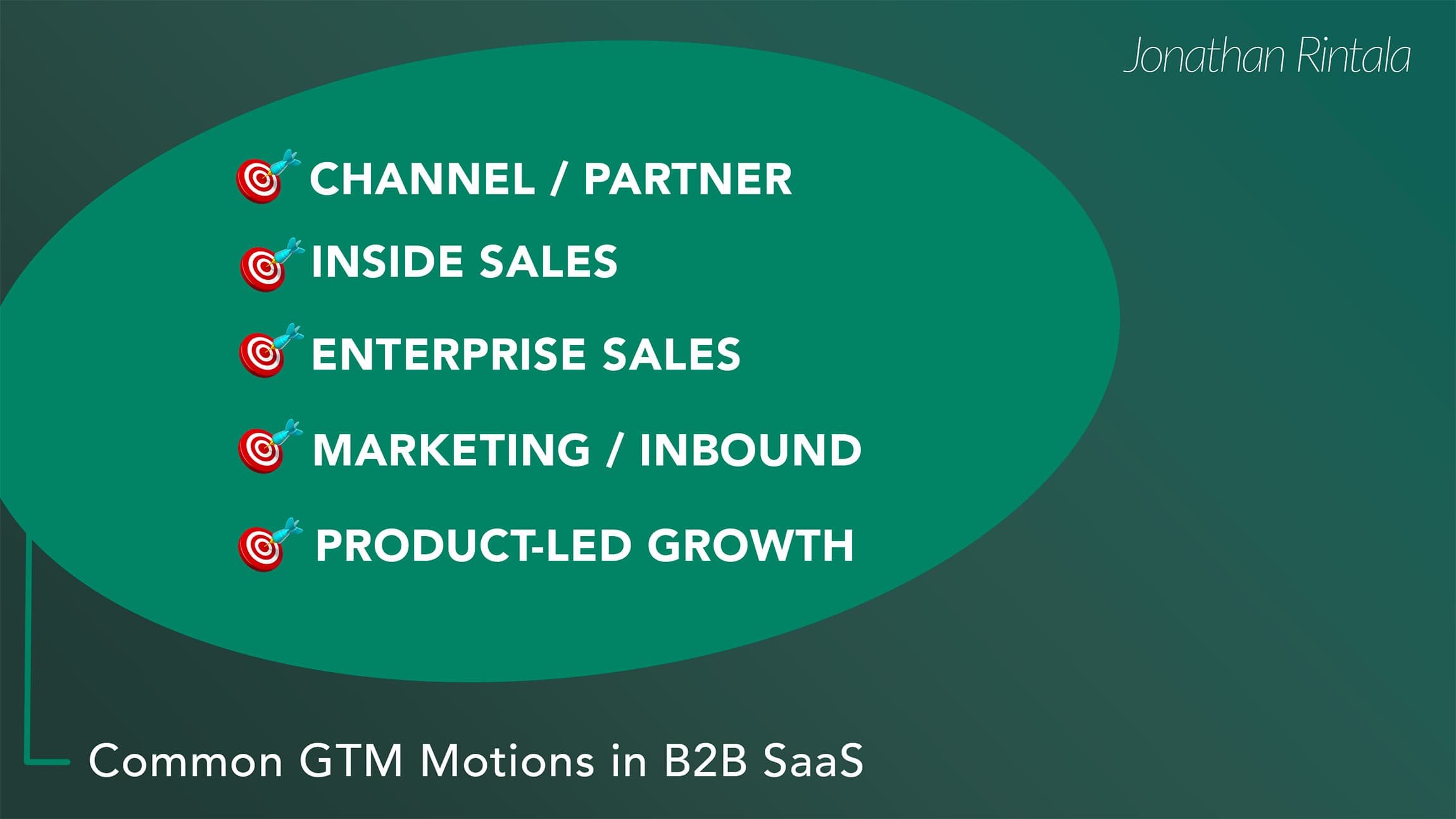
GTM model (or ARPA): Similarly, SaaS that run a product-led go-to-market, inbound motion, or simply work with smaller deal sizes generally have higher churn compared to enterprise SaaS, but also much faster sales cycles (more predictability) - and likely a much lower CAC. So make sure you benchmark your SaaS against the right metrics. Monterro splits its B2B SaaS benchmarking data into the following 5 cohorts based on the GTM model:
Product Led Growth
Marketing / Inbound
Inside Sales
Enterprise Sales
Channel / Partner
1. Rule of 40
The Rule of 40 is a key metric for evaluating SaaS companies' financial health. It combines a company's revenue growth rate and margin, with a target sum of at least 40%. It's a universal metric used by most Private Equity firms and later-stage investors.
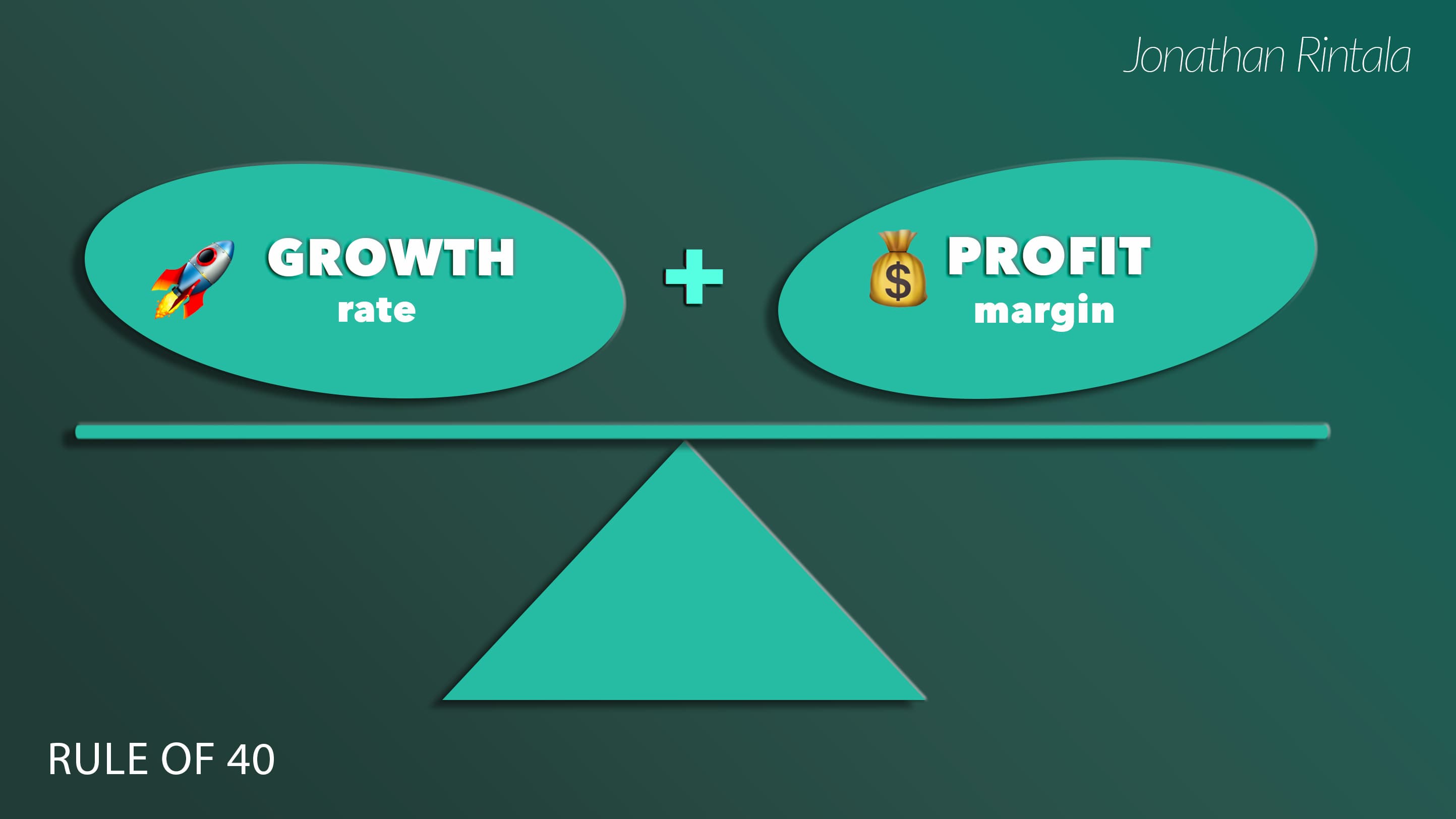
The Rule of 40 gives a quick snapshot of a company's balance between profitability and growth, where a score above 40% is seen as healthy.
The size of the company naturally determines the growth rate, meaning earlier-stage companies typically need to grow at a faster pace, with growth rates of 50% or more needed to gain critical mass. Thus, the Rule of 40 is a good indicator for slightly later stages >$1M ARR.
Example: SaaS Company X has a revenue growth of 39% annually, and is operating just above breakeven with EBIT margin of 4%.
Rule of 40 = 44% (39% revenue growth + 4% EBIT margin)
SaaS Company checks the rule of 40
2. Recurring revenue (%)
Recurring revenue percentage measures how attractive your business model is by looking at the percentage of revenue that is on a recurring basis.
SaaS companies are inherently subscription-based, meaning a big percentage of revenue is recurring, which gives a high level of predictability. The higher the %, the better.
Example:
SaaS company A has 70% of its revenue from subscriptions, and 30% as one-time fees for implementation and onboarding fees. Rating: Good ⭐️⭐️
SaaS company B has 95% of its revenue from subscriptions, and 5% as one-time fees for implementation and onboarding fees. Rating: Great ⭐️⭐️⭐️
3. Gross margin (%)
SaaS Gross Margin refers to the amount of revenue a software as a service (SaaS) company generates after subtracting the direct expenses associated with creating and providing its services (COGS).
It is expressed as a percentage of the total revenue, where most SaaS are somewhere in the range 65-85%.
4. Logo churn (%)
Logo churn measures the percentage of customers lost during a given period, providing a clear view of customer retention at the account level.
Revenue churn is another common metric to understand stickiness and customer satisfaction, which takes into account the size of the customers measured in revenue.
Generally, high-ticket enterprise SaaS tends to have lower logo churn, whereas PLG SaaS towards SMB has higher churn by default.
5. NRR (%)
Net Revenue Retention (NRR) measures the percentage of recurring revenue a company retains from existing customers over a specific period, including upgrades, downgrades, and cancellations.
Metric | Category | OK | Good | Great |
|---|---|---|---|---|
NRR (%) | Customer satisfaction | <100% | 100 - 110% | >110% |
It gives a good view of long-term health, profitability, and customer satisfaction, with a rate over 100% indicating revenue growth from the existing base - ie. growth without acquiring any new customers.
6. Sales cycle
A SaaS sales cycle is the time it takes to convert a new customer, from initial prospecting and demoing to final closing.

A shorter sales cycle means faster time to generate revenue from initial sales & marketing activity, which is more attractive than a longer one.
7. NPS
Net Promoter Score (NPS) measures customer loyalty and satisfaction, crucial for retention, by asking users how likely they are to recommend the product (0-10 scale).
An average SaaS benchmark is around 40, and over 60 is deemed great.
Not measuring NPS yet?
A simple proxy for measuring NPS is looking at how your SaaS compares on review sites like G2 or Capterra. Learn more about how I got our SaaS the first 20 reviews on G2 for Univid - that scores a 4.8/5.
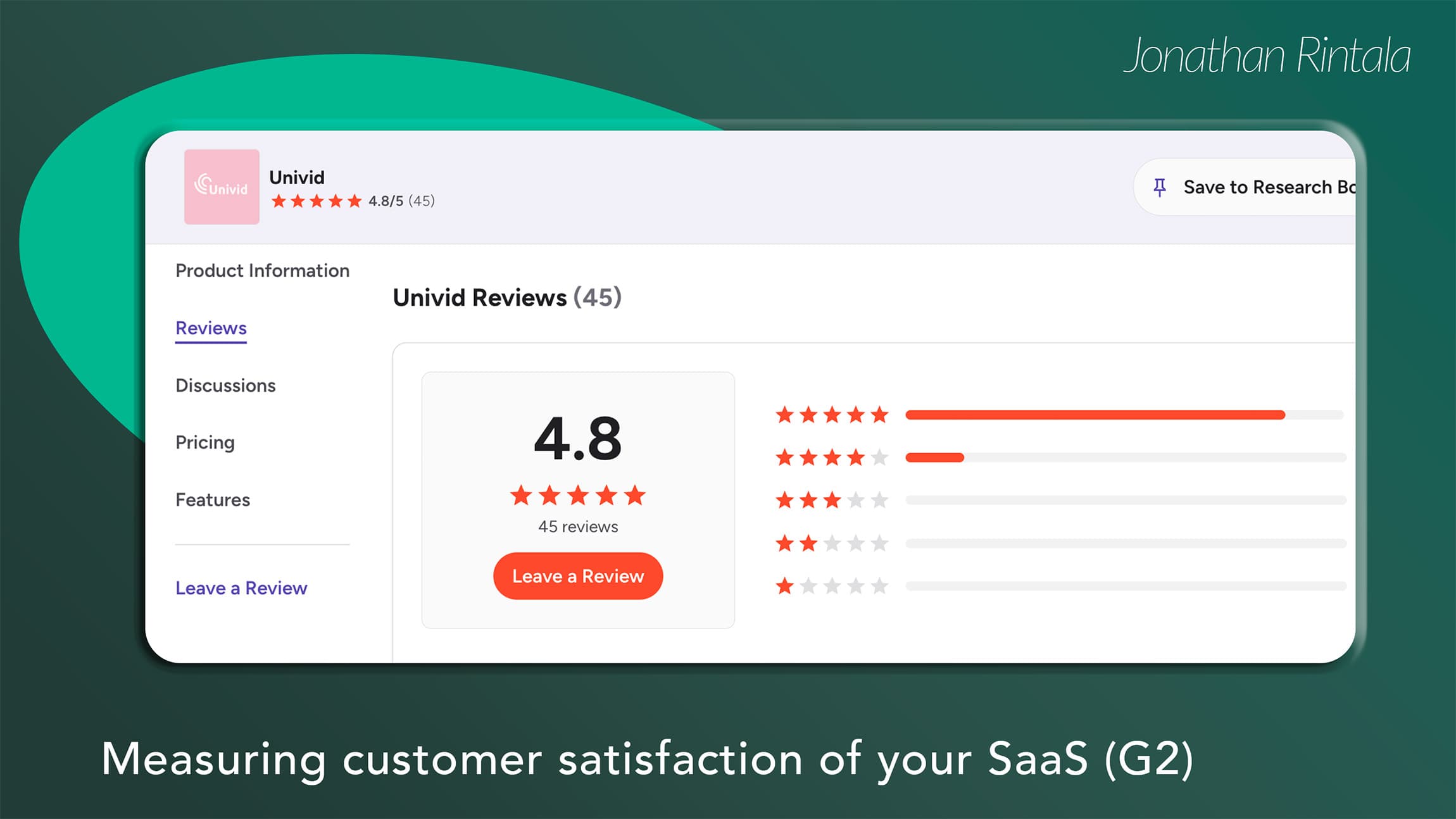
And you can (and should) obviously feature this as social proof on your website too.
Having good relationships with your customers is key here - so make sure to not forget about your customer success team. As a matter of fact, customer success can be a great growth channel for your SaaS that both scales and does so cost-efficiently.

8. Largest customer (%)
Measuring your largest customer's revenue as a percentage of total ARR or revenue helps measure customer concentration risk.
If a single customer accounts for > 10-15% of revenue, your business may be viewed as riskier by investors and acquirers than a SaaS with many smaller deals.
The key question is simple: What happens if this single customer churns?
Lower customer concentration generally leads to more predictable revenue and a more resilient SaaS. That is ultimately worth more.
9. Share international revenue (%)
International revenue share measures how much of your revenue comes from markets outside your home country.
According to Monterro's SaaS benchmark data, the average B2B SaaS company generates around 37% of revenue internationally.
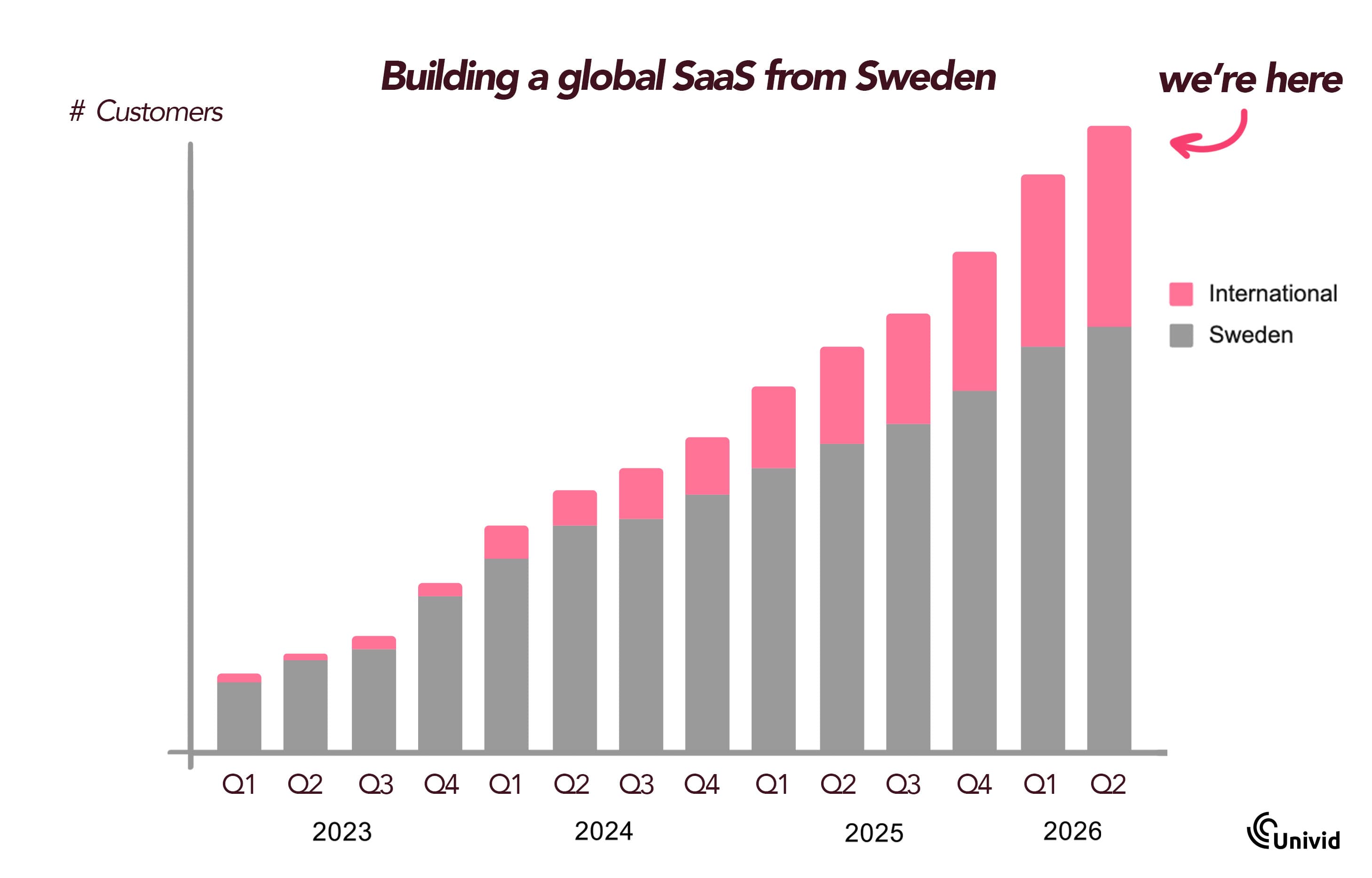
Interestingly, the relationship between international revenue and growth changes as companies scale. Companies below $1M ARR only have around 20% in international revenue share. Typically, as companies mature, more revenue comes from outside of the home market - see the example of Univid (a B2B SaaS from Sweden) above.
Metric | Early Stage | Growth Stage | Mature |
|---|---|---|---|
International Revenue Share | <20% | 20 - 50% | >50% |
How share of international revenue influences growth: Monterro:s data from B2B SaaS companies in growth stages show that those with a more domestic revenue mix grow nearly X2 as fast as their international-focused peers. However, this pattern reverses at scale, from €5M and above, internationally focused companies consistently outgrow their more domestic counterparts.
More resources on startup exits
Check out the top list of books on SaaS and startup exits.
Or read the founder's guide to a successful SaaS exit.